30 Plants a Week
How to count plants towards 30 a week, what counts and what does not, and a realistic example week built from ordinary meals.
Published 2026-10-26
Expert review: pending — this line is filled in only after the review pass is complete.
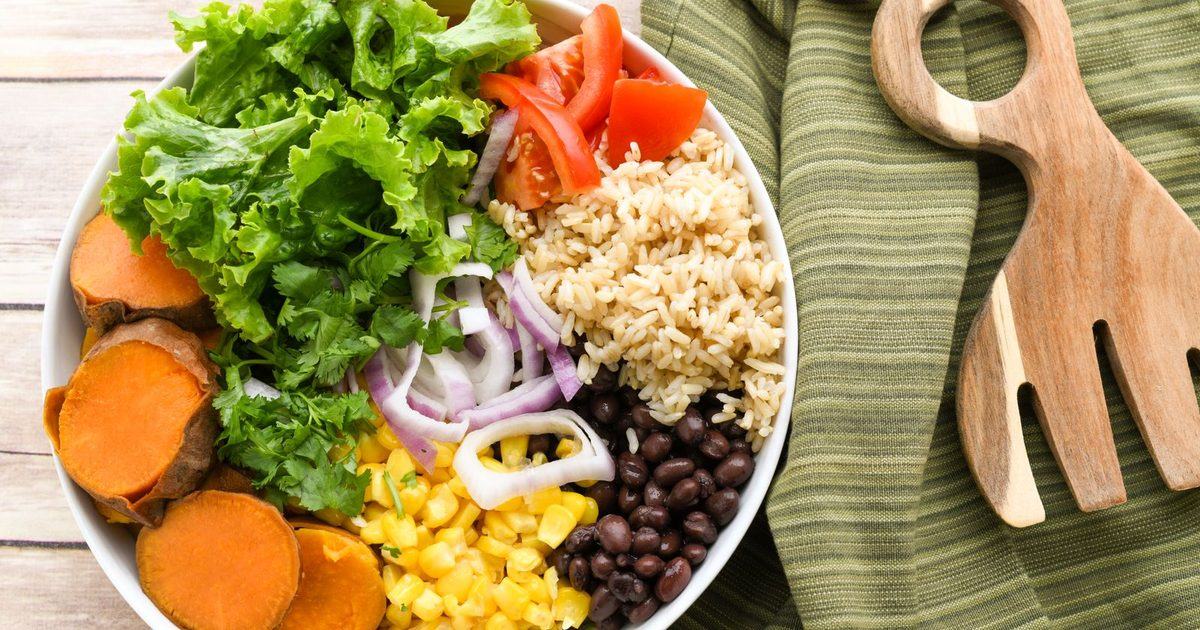
What this guide answers
Thirty plants a week sounds like a lot. It sounds like the kind of target invented by someone with a vegetable garden, a farmers’ market habit and far more time than you have. It is also, if you count the way this guide suggests, much closer to ordinary eating than it first appears — and it is important to be honest about what the number actually is before you try to reach it.
The number comes from a real study, and it is not a medical target. In McDonald et al. (2018), from the American Gut Project and published in mSystems, a large citizen-science study collected samples from 11,336 participants, mainly in the US, UK and Australia. In a small subset comparison within that study, the 41 participants eating more than 30 different plant types per week had greater gut microbial diversity than the 44 participants eating 10 or fewer. Plant variety, rather than whether the diet was vegan, vegetarian or omnivorous, tracked with diversity in that analysis. The high-variety group was also less likely to carry antibiotic-resistance genes in that analysis.
Now the limits, which belong in the same breath as the finding. This was an observational study, not a trial: it shows an association, not proof that eating 30 plants causes better gut health. “30” is not a biological threshold. It was a comparison group cut-off in the study design, later adopted as a practical goal by commentators. “30 different plants a week” should be described as a variety goal discussed in the literature, never as a required, optimal or medically endorsed target. The 30-versus-10 comparison rests on small subsets — 41 versus 44 people — not the full 11,336. And it has not been shown that hitting 30 plants a week improves any named symptom, condition or lab marker in a given reader, or that diversity itself, measured by any test, equals health. If anyone sells you 30 plants as a guarantee, they are selling you something the study never said.
So why bother with it at all? Because as a practical idea — eat a wider variety of plants across the week — it is genuinely useful, and the mechanism behind it is straightforward. Different microbes ferment different fibres and plant compounds, so a wider range of plant foods gives a wider range of microbial fuel. Gut microbes ferment some dietary fibre into short-chain fatty acids, mainly acetate, propionate and butyrate, and butyrate in particular is a major energy source for the cells lining the colon. Variety is not magic; it is just a wider menu for the microbes that do that fermenting. Treat 30 as a fun counting challenge to work towards, not a pass-or-fail test, and it becomes a helpful nudge rather than another source of food guilt.
How to start / the plan
The counting rules — and whose rules they are
Be clear about this: the study did not publish a counting rulebook. The convention below is this article’s own practical suggestion, not a rule from the study. Use it because it makes counting easy, not because science decreed it.
Each distinct plant food counts once per week, however many times you eat it. An apple on Monday and an apple on Thursday is one plant, not two. That single rule prevents the obvious cheat — thirty apples — and it is the rule that makes the whole idea meaningful. Vegetables, fruits, wholegrains, legumes, nuts, seeds and herbs all count as different plant types in the popular retelling of the study, and this guide follows that broad approach. Spices count too, which surprises people and helps a lot: the cumin in a curry, the dried oregano on pasta, the cinnamon in porridge are all plant foods, even in small amounts. Frozen and canned produce count as well — the World Health Organization’s healthy diet guidance notes that frozen and canned produce count towards fruit and vegetable intake, provided they have no added sugars or excess sodium — which matters for anyone whose fresh produce goes off before the week is out.
What generally does not count, on this guide’s convention: refined grains with most of their fibre removed, and fruit juice without fibre. A white bread roll is not the same counting entry as wholemeal bread, and a glass of orange juice is not an orange. Oils do not count either — olive oil is a fine food, but it is not a distinct plant entry in this game. These are judgement calls in a counting game, not laboratory facts, and if you count slightly differently, nothing bad happens. The point is variety on your plate, not a perfect scorecard.
A realistic example week
Here is what a week can look like without any special shopping trip, built from ordinary meals. Count along.
Monday. Breakfast: porridge oats with a banana and a spoonful of mixed seeds — oats, banana, sunflower seeds, pumpkin seeds, flaxseed (5). Lunch: a sandwich on wholemeal bread with lettuce, tomato and cucumber — wholemeal wheat, lettuce, tomato, cucumber (4, running total 9). Dinner: rice with lentils, carrots and onion, seasoned with cumin and garlic — rice, lentils, carrot, onion, cumin, garlic (6, total 15).
Tuesday. Breakfast: yoghurt with berries and an apple — berries count as one entry per type, so say blueberries and apple (2, total 17). Dinner: pasta with a tomato sauce, spinach and a pinch of dried oregano — pasta wheat counts only if wholemeal, so count tomato, spinach, oregano (3, total 20). Notice that foods already counted on Monday do not count again: the onion in Tuesday’s sauce adds nothing to the total, and that is fine.
Wednesday. A chickpea and vegetable stew with sweet potato, peppers, a tin of chopped tomatoes (already counted, so no new entry), coriander and a squeeze of lemon — chickpeas, sweet potato, pepper, coriander, lemon (5, total 25).
Thursday. Breakfast: toast with peanut butter — peanuts (1, total 26). Dinner: a stir-fry with broccoli, mushrooms, soy sauce and sesame seeds — broccoli, mushroom, sesame (3, total 29). Mushrooms are fungi, strictly speaking, not plants, and a purist would leave them out — but this is a food-variety game, and most popular versions count them. If you prefer strict botany, swap in green beans and you are still there.
Friday. A handful of walnuts as a snack, or a few herbs scattered over dinner — walnuts (1, total 30). Done, with two days to spare, and nothing in that week required a health-food shop, a supplement, or a recipe you had to learn.
The lesson of the example week is not the total. It is that breakfast alone can reach four or five plants, that herbs and spices quietly do a lot of the work, and that repeating favourite foods does not hurt you — it just does not add to the count. If your week reaches 18 or 22, that is still a more varied week than one built on the same five foods on rotation. There is no failure here, because there was never a medical threshold to fail.
Making variety easy rather than exhausting
A few habits carry most of the weight. First, keep a mixed bag of frozen vegetables and a tin or two of beans or chickpeas in the cupboard, so a low-effort dinner still adds plants. Second, buy one new herb or spice a month rather than twenty at once; a jar of cumin or a bunch of coriander is a small change that repeats across many meals. Third, let snacks do some work: fruit, nuts and seeds are plants too, and they count just as much as the vegetables on your dinner plate. Fourth, do not throw out foods you love in order to chase novelty. A varied diet built on foods you actually enjoy will last; a punishing one built on foods you resent will not survive the week.
One more caution, carried over from the fibre guide: add new plant foods gradually if you are not used to them, especially beans and lentils, and spread them across the day. A sudden large increase in fibre can cause wind and bloating, and a counting challenge is not a reason to ignore that. Variety over weeks beats a heroic single day.
Common questions
Do I have to hit 30 every week?
No. Thirty was a comparison group in one observational study, not a weekly requirement, and treating it as one misses the point. Some weeks you will reach it easily, some weeks you will not, and neither week says anything about your health on its own. If counting helps you notice that you eat the same six plants on repeat, it has done its job even if your total is 20.
Does a smoothie count as ten plants?
Only if it contains ten distinct plant foods, and each one counts once — the same rule as everywhere else. Blending does not multiply plants, and it does not create new ones. A smoothie with banana, berries, spinach and oats is four plants, which is a good start to the day, but it is not a shortcut to thirty.
What about potatoes, rice and bread?
Wholegrains count; refined versions are a judgement call, and this guide counts wholemeal bread and brown rice but not white bread or white rice as new entries, because much of the fibre has been removed. Potatoes count, and keeping their skins on keeps more of their fibre — the same logic as the fibre guide. None of this is a verdict on the foods themselves. White rice is a perfectly good food; it just does not help a variety count much.
Is diversity itself a health score?
No — and this matters. There is no validated universal test score for a healthy microbiome that this blog can quote, and no single bacterium or ratio defines gut health. Diversity in the study was a laboratory measure associated with variety of intake, not a grade for your gut. Do not buy a test that promises to score your microbiome and dictate a personal diet on the basis of it; that use of testing is not established, and this blog does not recommend it.
I eat meat. Can I still do this?
Yes. In the American Gut analysis, plant variety tracked with diversity rather than whether the diet was vegan, vegetarian or omnivorous. This is not a vegetarian challenge and it is not a judgement about meat. It is a prompt to notice the plant side of your plate, whatever else is on it.
When to talk to a healthcare professional
Talk to a healthcare professional or registered dietitian if you have ongoing gut symptoms, a diagnosed gut condition, take regular medication, or are unsure whether changing your diet is suitable for you. That applies in particular if adding plant foods, beans or lentils brings persistent discomfort rather than the temporary adjustment described in this guide. Seek medical care promptly if you experience severe, persistent or worrying symptoms, including blood in your stool, unintentional weight loss, severe abdominal pain, or symptoms that keep coming back. Do not stop or change prescribed medicine because of anything you read here.
Count plants if counting amuses you and helps you vary your meals. Do not count them as a test you can fail. The study behind the number was about variety and association, not about a threshold — and a week with a few more plants in it, eaten in meals you enjoy, is a good week by any honest measure.
Sources
- McDonald et al. (2018), American Gut Project, mSystems — reported via LabMedica — accessed 2026-10-26
- Economic Times summary of McDonald et al. (2018), American Gut Project — accessed 2026-10-26
- PMC review — Gut microbiota, short-chain fatty acids, and 'biotics' in exercise — accessed 2026-10-26
- World Health Organization — Healthy diet fact sheet — accessed 2026-10-26